
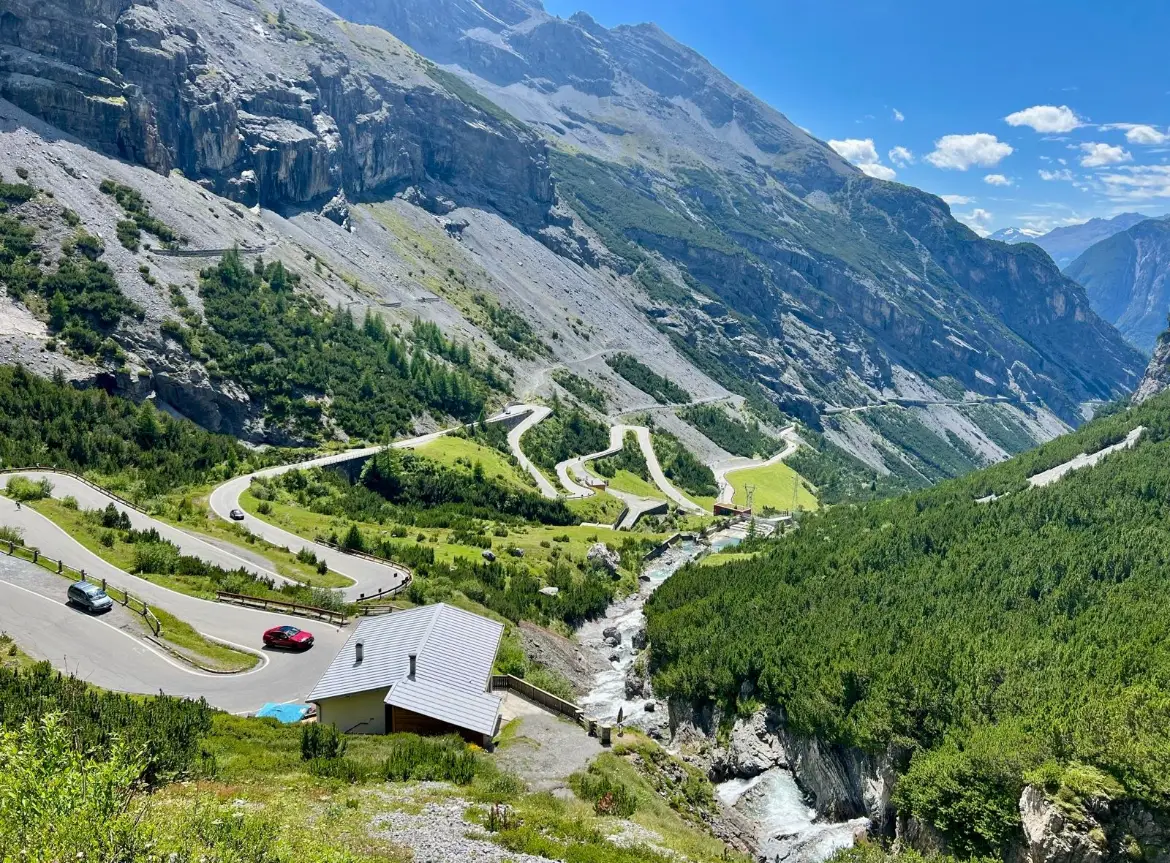
Passo Stelvio in Italy: a legendary climb in the history of the Giro d'Italia
High in the Italian Alps, surrounded by towering peaks and endless hairpin bends, lies the Stelvio Pass – or Stelvio Pass. On 2,758 mIt is one of the highest asphalted mountain passes in Europe and a true monument to cycling.
For more than half a century the Passo Stelvio in Italy has played a leading role in the Giro d'ItaliaIt is a climb that challenges the best cyclists in the world with its brutal slopes and breathtaking views. It is a climb that commands respect and rewards courage.
The numbers behind the legend
The Stelvio Pass Can be climbed from three sides:
- From Prato allo Stelvio (North side)24.3 km with 48 hairpin bends, average gradient 7.4%.
- From Bormio (South side)21.5 km with 33 hairpin bends, average gradient 7.1%.
- From Switzerland via Shadow pass: 13.4 km, average gradient 8%.
Each side offers its own rhythm and scenery, but they all have one thing in common: relentless climbing through some of Europe's most spectacular alpine landscapes.
The Giro d'Italia and the birth of a myth
The Stelvio Pass first appeared in the Giro d'Italia in 1953And what an introduction that was!
That year, the legendary Fausto Coppi He attacked on the snowy slopes of the Stelvio during the penultimate stage. His action sealed the final victory and confirmed the mythical status of the mountain.
Since then, the Stelvio has become a permanent fixture in the history of the Giro – a climb synonymous with drama, weather conditions and unforgettable victories.
Other historical moments include:
- 1965 – The Stelvio returned after an absence of 12 years; snow walls and freezing cold turned the stage into pure chaos.
- 1972 – Eddy Merckx dominated again and proved that even the 'Cannibal' on the Stelvio had to go to the limit.
- 1980s-1990s – The climb became a symbol of the difficulty of the Giro and was often used as an example. Cima Coppi, the highest point of the race.
- 2020 – The epic duel between Jai Hindley, Wilco Kelderman and Tao Geoghegan Hart on the Stelvio provided one of the most exciting finals in the history of the Giro.
Every time Stelvio Pass When the Giro appears in Italy, it is guaranteed to be a spectacle.
The elements: snow, altitude and pure suffering.
Motorcyclists are often confronted with extreme conditions on the road Stelvio Pass — thin air, biting cold and snowdrifts taller than a man. Even in June, temperatures can plummet near the summit. The Granfondo Stelvio Santini is organized in June. read here Why you should ride it!
The climb is not only a physical ordeal, but also a mental battle. Every hair bend (and there are plenty!) seems endless, but every bend offers a new view: glacier peaks, rugged cliffs and the road that winds below like a ribbon of asphalt.
That's what makes Stelvio Pass In Italy it is an unforgettable experience — a mix of beauty and brutality that cannot be found anywhere else.
Why every cyclist dreams of the Passo Stelvio
For both amateurs and professionals, conquering the Stelvio Pass It's a badge of honor. The combination of history, beauty and sheer difficulty makes the climb a dream ride for cyclists all over the world.
Many motorcyclists experience this during events such as the Gran fondo Stelvio Santiniwhere thousands of participants conquer the same legendary slopes that were once ridden by Giro champions. It's more than a race: it's a pilgrimage. Would you like to participate in this Granfondo? Then look here our journey!
Conclusion: The eternal symbol of the Giro d'Italia
The Stelvio Pass In Italy, the Iberian Pass is not just any mountain pass; it's a symbol of what cycling is about: pain, perseverance and glory.
From the attacks of Fausto Coppi to today's heroics, the Stelvio has witnessed some of cycling's greatest moments.
Whether you watch at home or climb the mountain yourself, one thing is certain:
The Stelvio will always remain the beating heart of the Giro d'Italia.